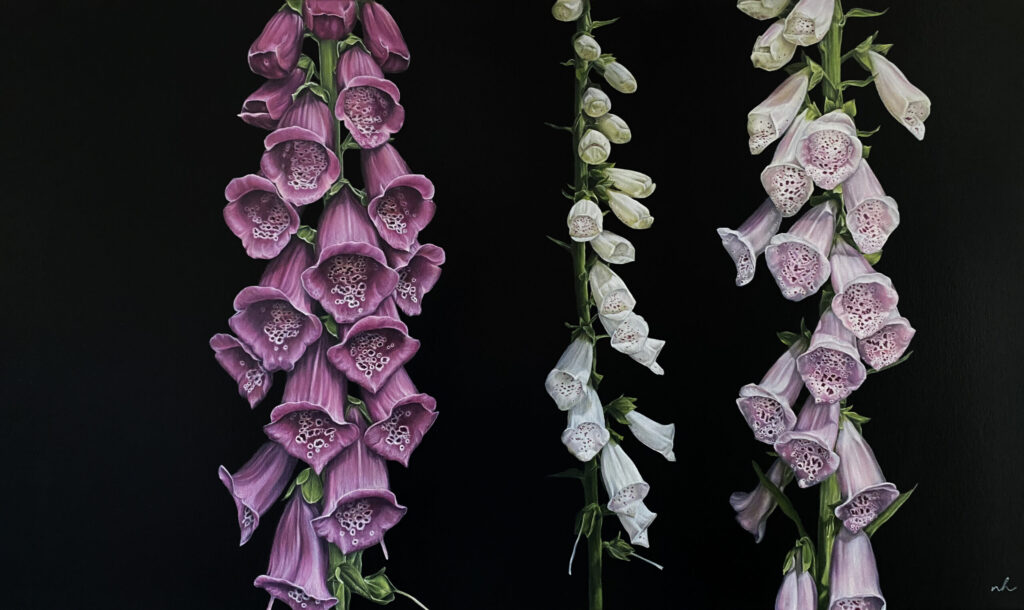
Working Title Strange Beauty – Invasive Species
There is no disputing that foxgloves are an invasive species in Tasmania, but in this crazy, overstimulated world let us just stop, breathe and appreciate their beauty. Let us see not just the pink, white and magenta, but the subtle variation within these colours, the yellows, greens and purples.
Let us notice the shapes that make them up and how they move and grow from bud to open bloom.
And most importantly let us imagine, the whimsy and the magic of a world unseen living amongst the foxgloves.
Nicole Hutchins
O
Environmental Weeds, Invasive species, Pests, Unwanted plants, Compromised wilderness
In Australia the intellectual context has been one in which a default assumption was still that landscapes were devoid of human influence until proven (by scientists) to be otherwise rather than the assumption that human activities were intimately entwined in the creation and revegetated landscape and this has been the case for 10’s of thousands of years. Colonisation has allowed this perception to be negated as more plants are introduced to replicate an English garden allowing the introduction of species that ultimately reduce the biodiversity that evolved in this landscape. The control nature of the English landscape and the ethics that go with that have allowed weed infestation in a landscape that has never had to deal with it before the last 200 years. Natures response being to battle with this influx in the only way it can… plant growth regardless of a plant’s nascence.
Euro-Australia still struggles for possession of the land with a frontier mentality whether in Pastoralism, Mining or Tourism. Added to this is the colonial frontier as an imagined line in time and space that erased or rendered inauthentic all the preexisting relations that people had with the land. We still need control hence ‘Get rid of Weeds’.
The first nations way of passing on knowledge is rooted in understanding country as a cultural landscape comprised of interconnecting relationships. European understanding of country has a different interconnectivity, based on science and potential use. This perception has no longevity and the aftermath of this is the damage to biodiversity and landscape.
Because this landscape has evolved with indigenous knowledge, it cannot be reproduced in other contexts without losing its effectiveness and causing harm. The knowledge held in ‘place’ is seen as an addition to existing western knowledge rather than the result of deep time understanding.
Landscapes are defined by their plants and plants are the core of all life. The success of our species depends on a successful relationship with plants.
Shifting the narrative from ‘invasive species’ to management of ecosystems is the key to moving forward.
Weeds like humans occupy an ambiguous space in thinking about nature. Weeds are the stronghold of nature, the gap fillers, the untameable, the unruly, the ones actually fighting back from the damage of colonial intervention.
Phyto remediation- plants as environmental healers. The plants that grow uninvited in our surroundings represent the current status of coevolution.
Jenny Groves
O
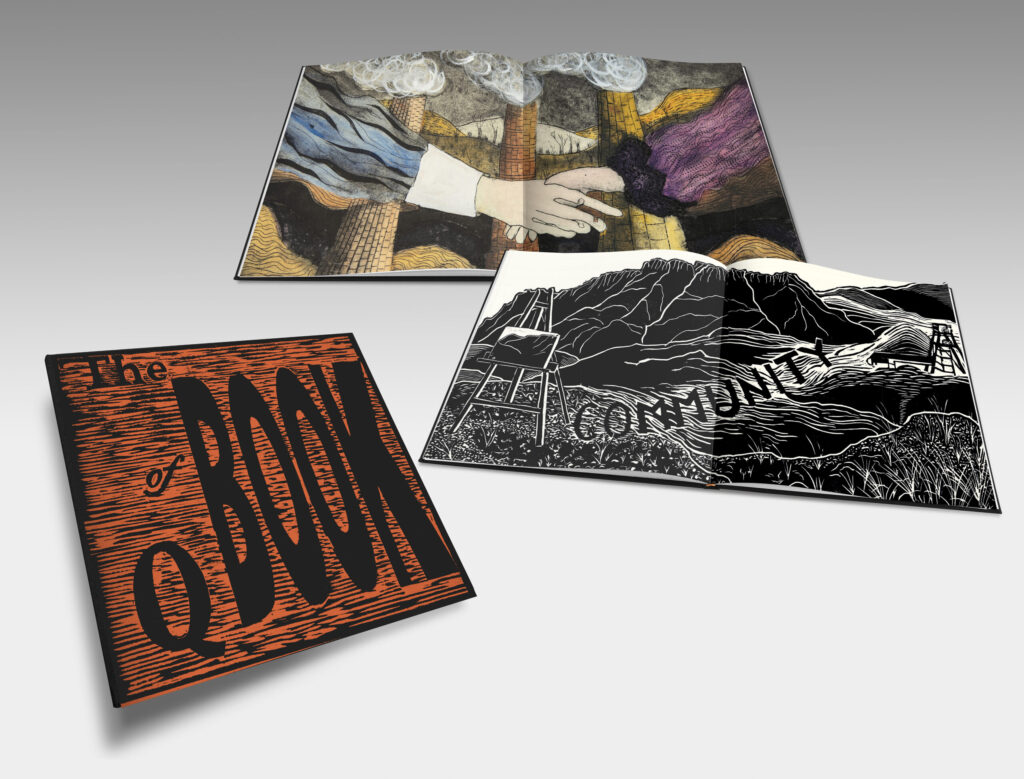
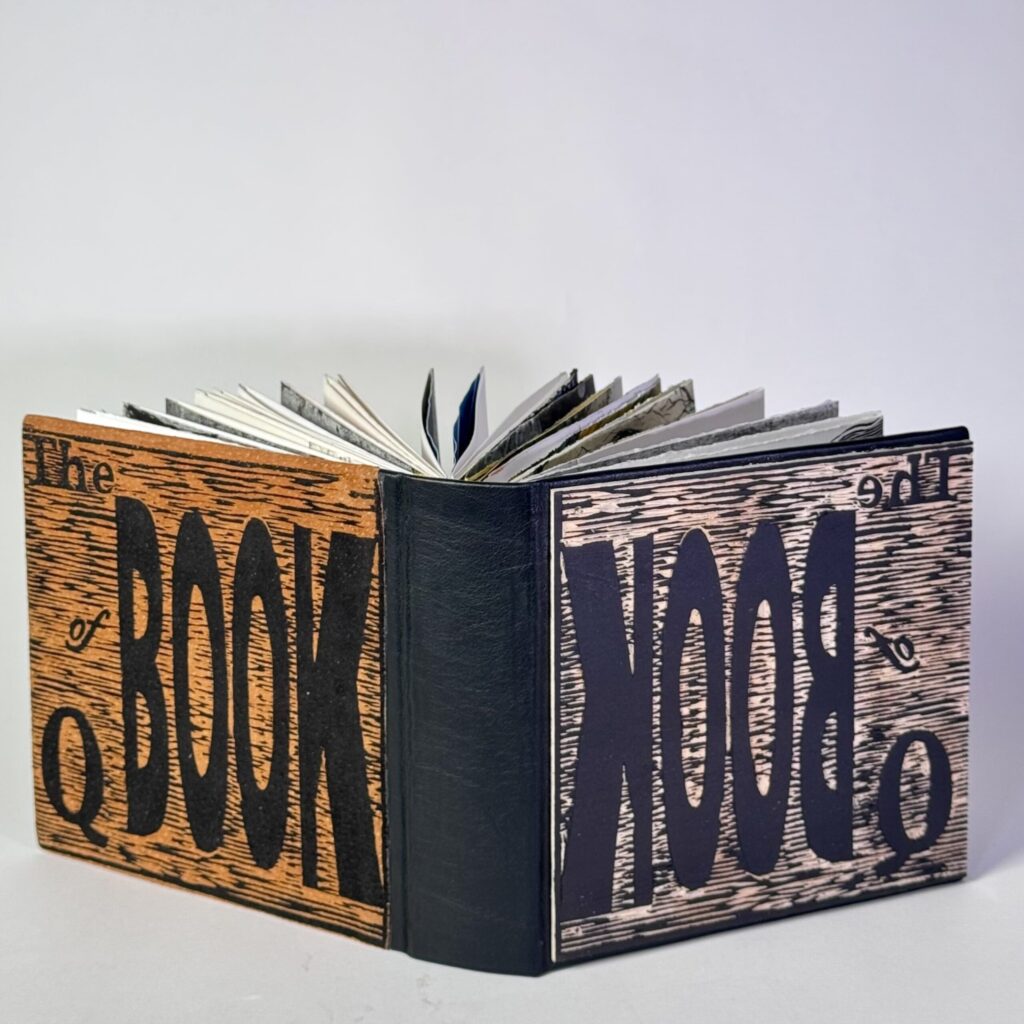
“The Book of Q” Publication
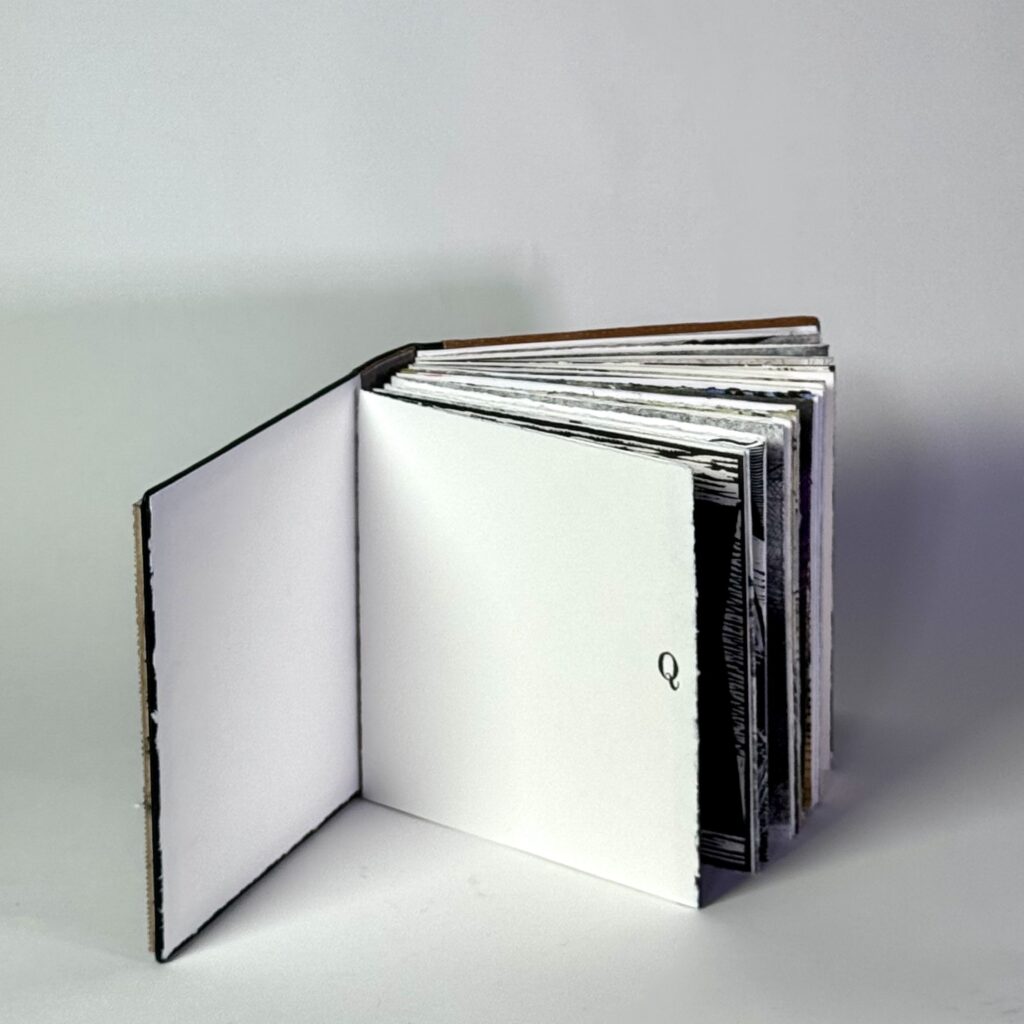
PressWEST is taking orders for a publication titled ‘The Book of Q’ which was an outcome of a trilogy of PW workshops in 2025. Through the auspices of the remarkable ‘Outside the Box’ organisation in Hobart we are publishing copies of our initially collaborative book at a cost price of $75.00. Contact Helena through the presswesttas@gmail.com to reserve a copy. This is a pre-publishing offer that closes at the end of March with copies available after print run.
People into Place and Ideas through Materials into the Art of the Book
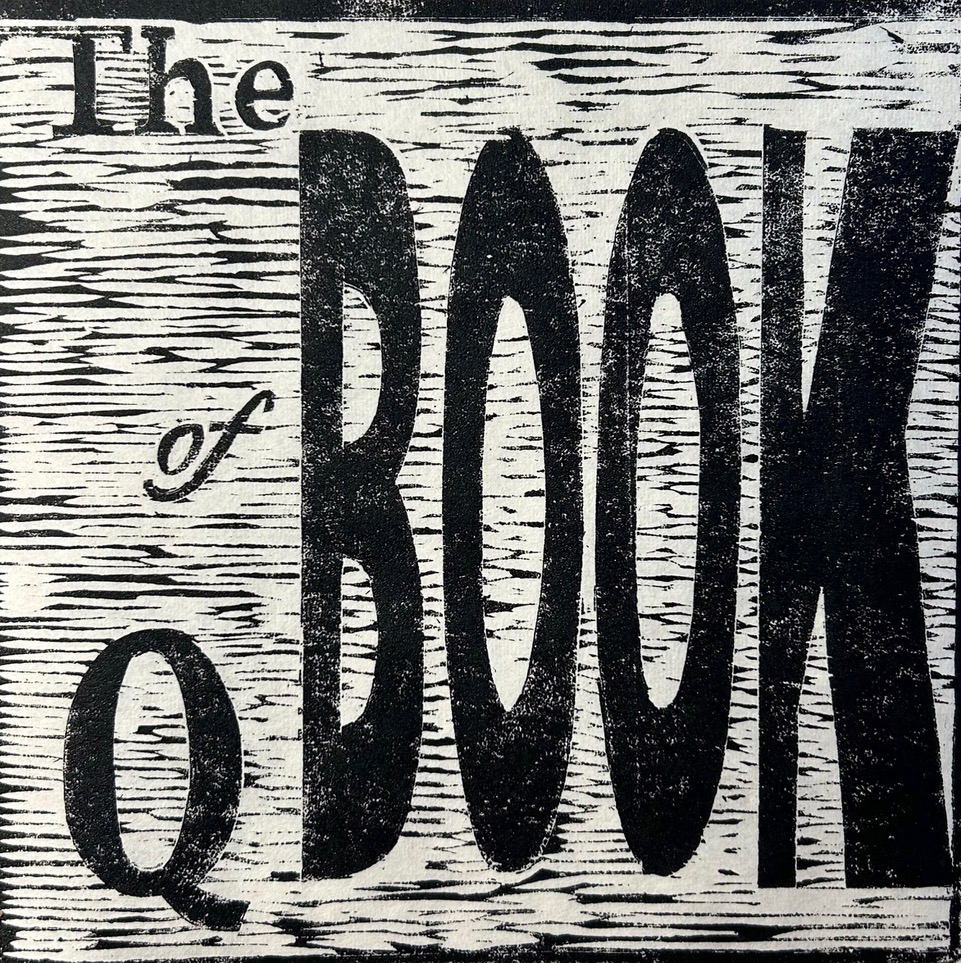
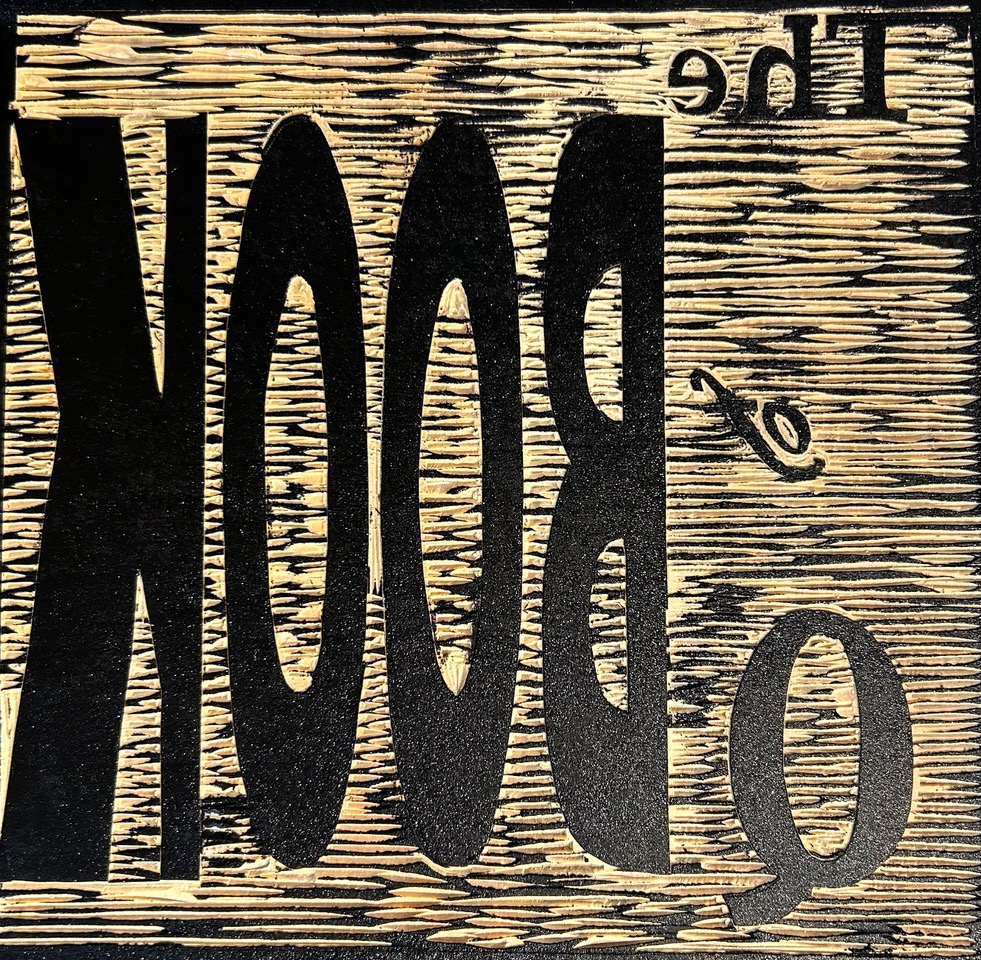
People into Place and Ideas through Materials into the Art of the Book
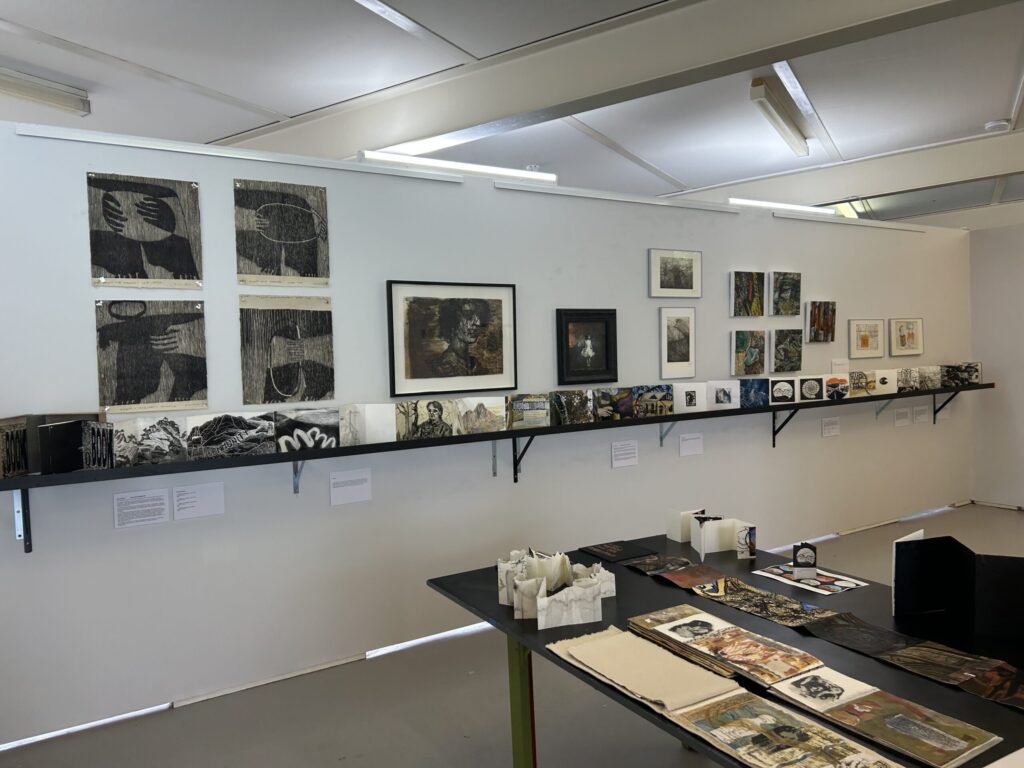
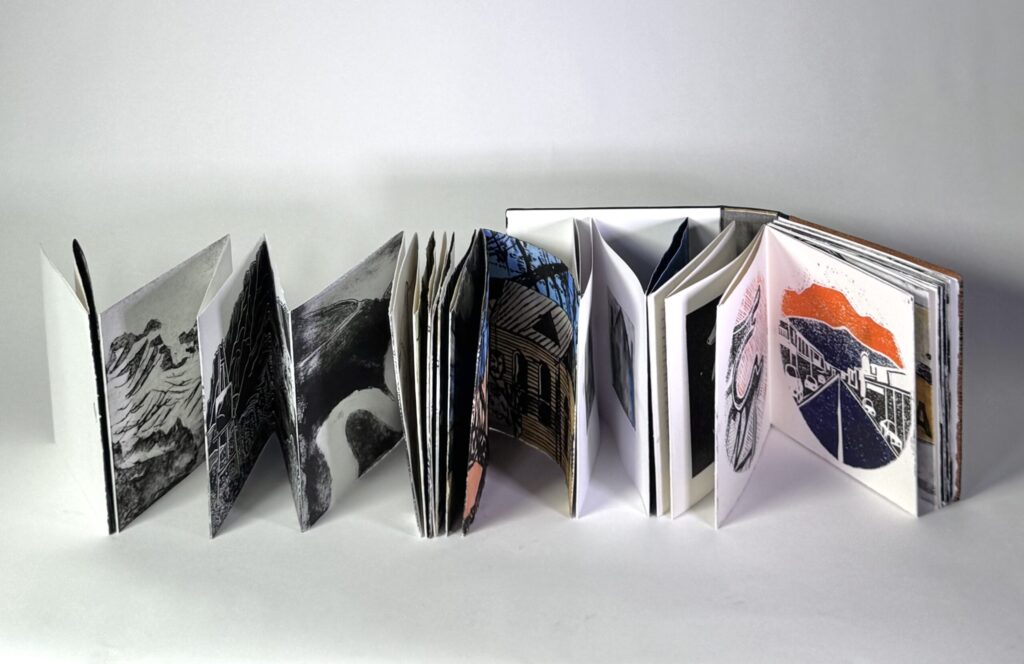
The Book of Queenstown is an artist’s book that evolved from a trilogy of art workshops held at PressWEST, Queenstown through the winter of 2025. The spirit of the workshops was to establish some essentially ‘bookish’ formats about Queenstown. Prototypes and experimental constructions and not immaculate bound volumes were the order of the day and the collaborative concertina Book of Q was a great outcome. Completed ‘books’ & associated artworks were shown at PressWEST during 2025 Unconformity Festival as part of the Art Trail.
A core group of artists attended a sequence of workshops:
1 – An introduction to Queenstown through drawing, painting and photography took place in middle June. The workshop heard from locals about their Queenstown experiences, visited the Galley Museum and responded to great talks from Leonie Oakes, Michael Schlitz and Rob Doherty. Participants researched and developed their ideas for ongoing development through drawings, photographs, paintings and writing.
2 – The second workshop in July had an emphasis on printing and developing sequences of imagery suitable for translating in the book form. Michael Schlitz and Damon Bird guided participants through various print techniques. 3 – Binding and aggregating printed, drawn material into book or sequential form with Leonie completed the trilogy in late August.
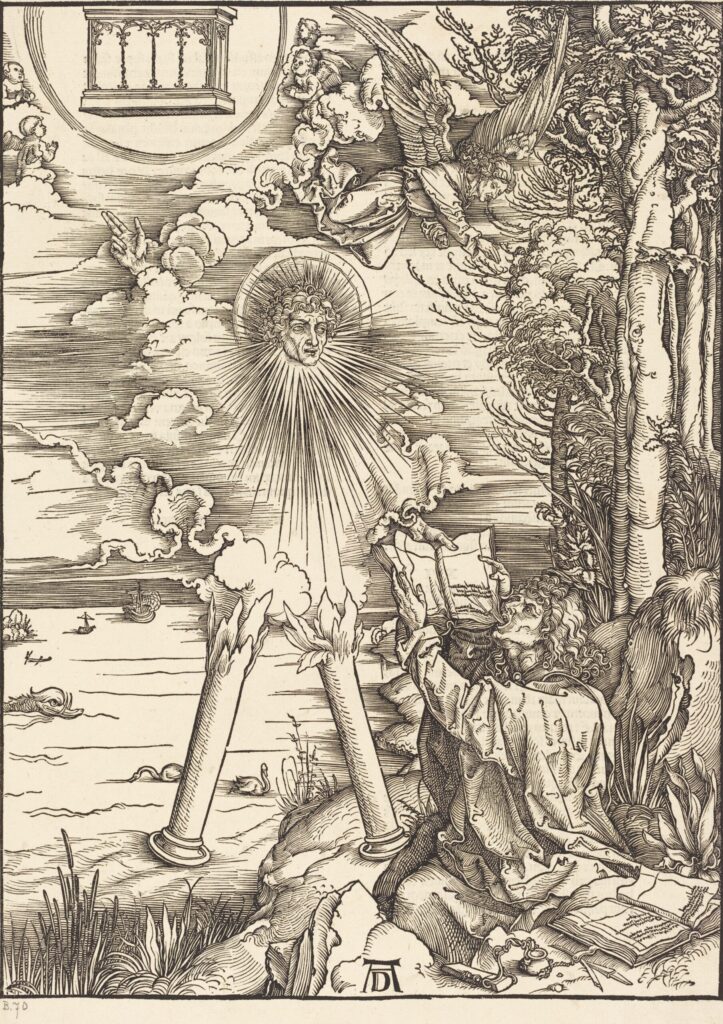
Frieda Beukenkamp, a Hobart printmaker, sent through a convenient U-Tube link – Elissa Watters on Albrecht Durer’s Saint John Devouring the Book. Find it and have a look if you can.
Take the Book and eat it up and it shall make thy belly bitter but thy mouth shall be as sweet as honey.
I copied the Durer St John image off the NGV’s website. It was particularly apt for the Book of Q workshops in that it came into the NGV Collection in 1923 through the Felton Bequest. This means that it was part of the Robert Carl Sticht collection and until his death, resided along with another forty nine Durer prints in Penghana, the large mansion on the hill in Queenstown. His collection of fine art, historical manuscripts and Oceanic material culture was the subject of research by Melbourne artist Ruth Johnstone for our LARQ Unconformity Project in 2012
Ruth Johnstone: The Unconformity 2012